
Find Divorce Decree Records in Marshall County
Marshall County divorce decree records are filed and kept by the Court Clerk at the District Court in Madill, the county seat in southern Oklahoma near Lake Texoma. The Court Clerk stores all family law filings, including divorce decrees, dissolution orders, and related documents. You can search Marshall County divorce cases online through the Oklahoma State Courts Network or contact the Madill courthouse directly for copies.
Marshall County Divorce Decree Overview
Marshall County Court Clerk and Divorce Decree Filings
The Marshall County Court Clerk office is located in Madill, Oklahoma at PO Box 58, Madill, OK 73446. Court Clerk Wanda Pearce and her staff maintain all district court records for Marshall County, including every divorce decree and dissolution of marriage case filed in the county. Office hours run from 8:00 a.m. to 4:00 p.m. Monday through Friday. You can reach the office at (580) 795-3220. Staff can search by party name or by the FD case number assigned to each divorce filing.
Marshall County is in south-central Oklahoma and sits along the northern shore of Lake Texoma. The county is part of the 20th Judicial District. The Marshall County District Court handles all family law matters in the county under the rules set by Title 43 of the Oklahoma Statutes. If you are searching for a divorce decree from Marshall County, the Court Clerk office in Madill is the direct source for certified copies and full case documents.
| Court Clerk | Wanda Pearce |
|---|---|
| Mailing Address | PO Box 58, Madill, OK 73446 |
| Phone | (580) 795-3220 |
| Hours | Monday-Friday, 8:00 a.m. to 4:00 p.m. |
| Judicial District | 20th District |
| Online Search | OSCN Docket Search |
| County Website | marshall.okcounties.org |
The Marshall County government website provides contact details and office information for county departments, including the Court Clerk. Use it to verify current hours and mailing address before sending a request.
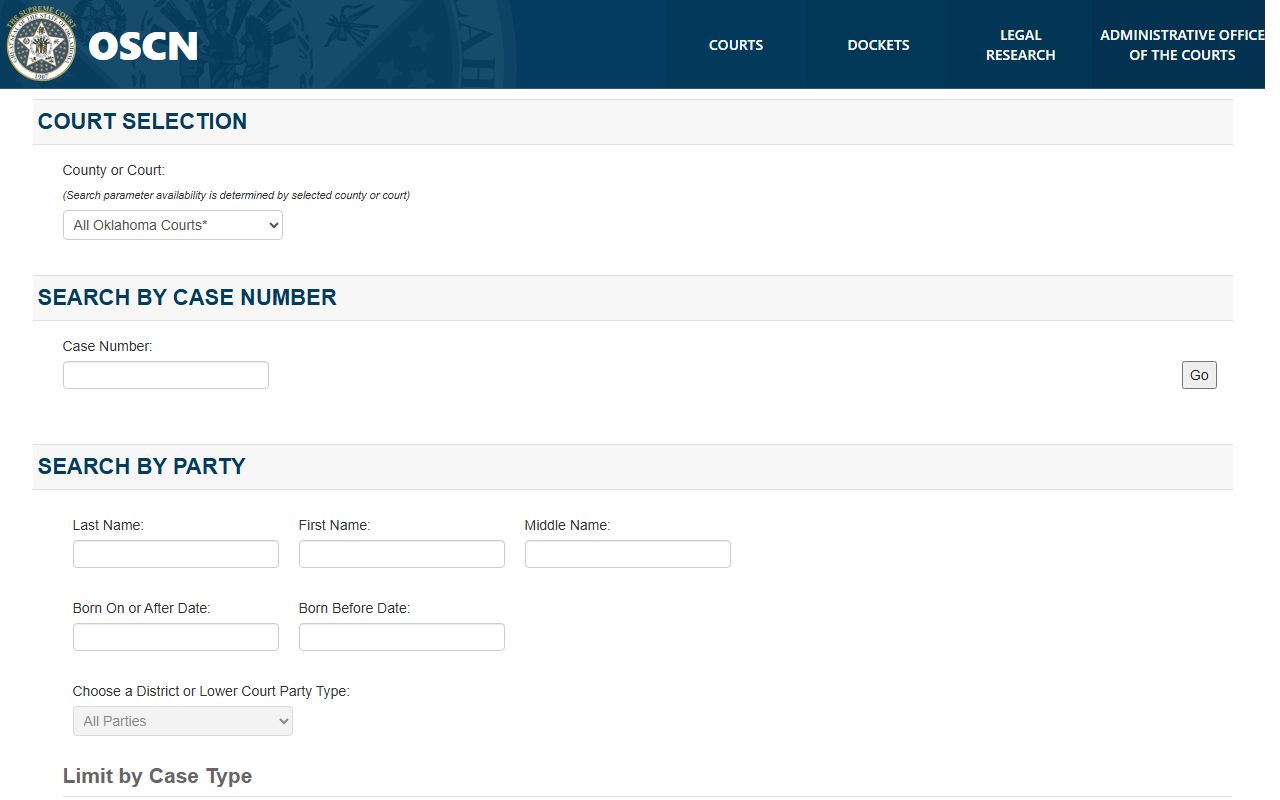
The Marshall County District Court page above is the starting point for online case searches and official court contact information for divorce decree records in Madill.
The Marshall County government site shown below lists current office hours, phone numbers, and mailing addresses for all county departments, including the Court Clerk that handles divorce records.
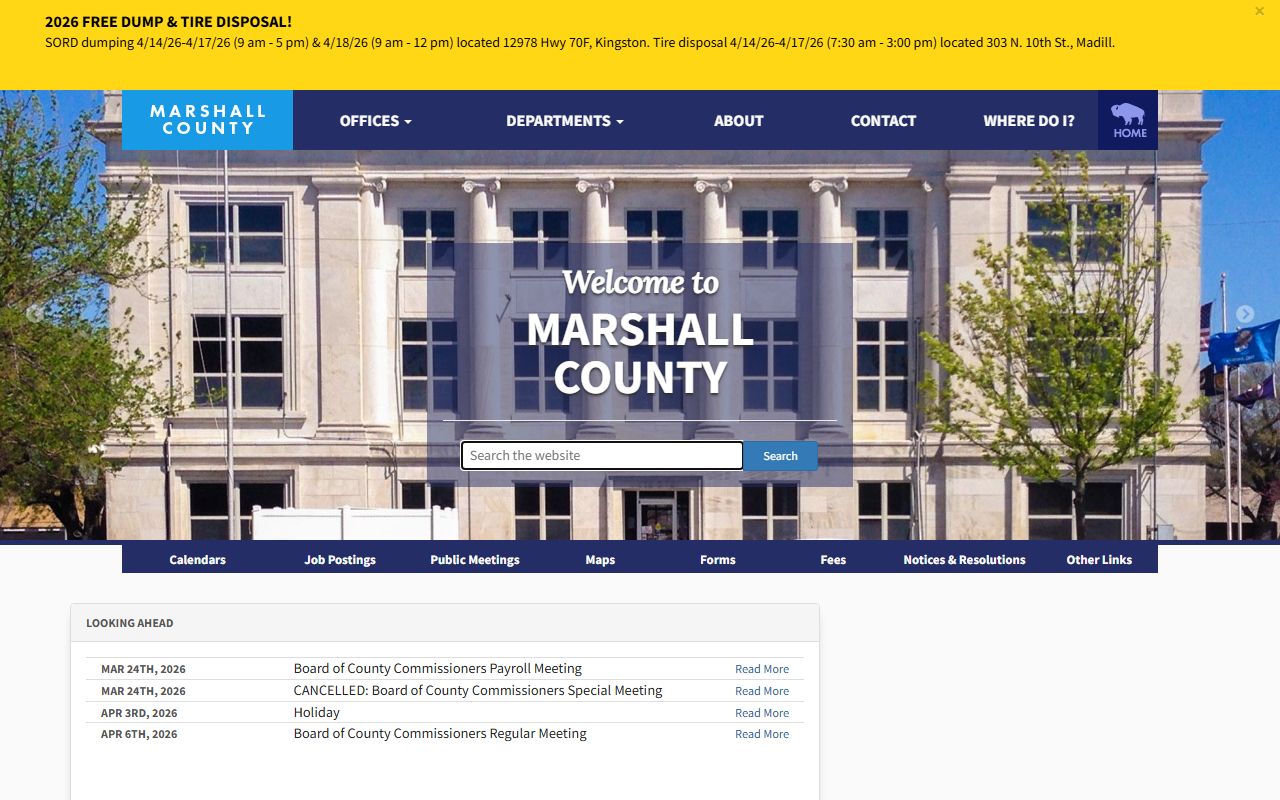
Use the county site above to confirm current contact details before visiting or mailing a records request to the Madill courthouse.
Searching Marshall County Divorce Decree Records
The free OSCN docket search lets you look up Marshall County divorce cases by name. Select Marshall County from the county list, enter one or both party names, and choose the FD case type for divorce filings. Results include the case number, filing date, party names, and a log of court activity. OSCN will show you when a decree was entered, but it does not display the full text of the document. To read the actual decree or get a certified copy, contact the Court Clerk in Madill.
Mail requests are an option if you cannot visit the courthouse. Write a letter with both spouses' full names as they appear on the filing, the year of the divorce, the case number if known, and your return address. Enclose a check or money order for copy fees and include a self-addressed stamped envelope. Plan on one to two weeks for processing. In-person visits are faster and let you review the record before paying for copies.
For divorces that took place before the OSCN digital records system was in place, physical files may exist only at the courthouse. Call the Court Clerk at (580) 795-3220 and give them as much detail as you have about the case. Marshall County divorce records go back to 1907. The Oklahoma Historical Society maintains archival records for Oklahoma counties and may be a useful supplementary source for very old divorce cases.
Marshall County Divorce Decree Copy Costs
The Marshall County Court Clerk follows Oklahoma's standard fee schedule for record copies. Plain photocopies run $1.00 for the first page and $0.50 for each additional page. Certified copies carry the court seal and cost more because a certification fee applies, which generally adds between $0.50 and $5.00. Most agencies, government offices, and courts require certified copies when you need to prove a prior divorce. A search fee may be added if staff must manually locate the record without a case number provided.
Call the Court Clerk at (580) 795-3220 to confirm the current fee schedule and accepted payment methods before visiting or mailing a request. Cash, check, and money order are the typical payment options at county courthouses in Oklahoma. Having the right amount ready when you visit makes the process faster.
Oklahoma Divorce Law and Marshall County Cases
Marshall County divorce cases fall under Title 43 of the Oklahoma Statutes, which is the state's family law code. Title 43 sets the rules for all divorce and dissolution cases in every Oklahoma county. The 20th Judicial District applies these statutes to every case that comes through the Marshall County District Court. There are no local Marshall County rules that override the state code.
Before you can file for divorce in Marshall County, at least one spouse must have lived in Oklahoma for six months and in Marshall County for at least 30 days. This is the residency requirement under Title 43 Section 102. Filing too soon can result in the case being dismissed. Most Marshall County divorce cases today use incompatibility as the ground, which is a no-fault option meaning neither party must prove fault. Fault grounds are still listed in Title 43 Section 101 and include abandonment, adultery, extreme cruelty, habitual drunkenness, and a few others.
Oklahoma divides marital property through equitable distribution, not a strict 50/50 split. The court looks at the full picture of the marriage and divides assets and debts in a way that is fair under those facts. Separate property, meaning what each spouse owned before the marriage or received as a gift or inheritance, stays with that spouse. Title 43 Section 121 gives the court the power to award alimony when one spouse has a real financial need and the other can reasonably contribute. Custody and visitation in Marshall County are decided under the best-interests-of-the-child standard set out in Title 43 Section 112.
A divorce decree is a binding court order. Both parties must follow its terms on property, support, and custody. If circumstances change later, either party can ask the Marshall County District Court to modify the decree. The Oklahoma Bar Association provides referrals to family law attorneys who can help with understanding a decree or filing for a modification.
Legal Resources for Marshall County Divorce
Legal Aid Services of Oklahoma provides free civil legal help to eligible low-income residents. Marshall County is within their service area for family law cases including divorce, custody, and support matters. Visit legalaidok.org to check income eligibility and learn how to apply. Service coverage can change, so it is worth a call to confirm they are actively serving Marshall County before you rely on their help.
The Oklahoma Bar Association runs a lawyer referral service and publishes plain-language information about the divorce process in Oklahoma. Their site explains what happens at each stage of a case, what a final divorce decree contains, and how to find legal help in smaller communities. If your case involves disagreements over property, custody, or support, getting advice from a licensed attorney before you sign anything is worth the time.
The Oklahoma State Department of Health maintains a statewide index of divorces since 1968. They can issue a verification letter confirming a divorce occurred in Oklahoma for a fee of about $15. This letter is not a copy of the divorce decree. It only confirms the event. If you need the full decree with all the terms spelled out, the Marshall County Court Clerk in Madill is the right source.
Nearby Counties with Divorce Decree Records
Marshall County borders several counties in southern Oklahoma. If a divorce was filed in a neighboring county, the Court Clerk there handles those records. Each county keeps its own divorce decree files.