
Search Oklahoma Divorce Decree Records
Oklahoma divorce decree records are kept by the Court Clerk in each of the state's 77 counties. These records include the final decree of divorce, property division terms, custody orders, and other filings tied to dissolution cases. You can search for Oklahoma divorce decree records online through the Oklahoma State Courts Network at no cost. The OSCN system lets you look up case numbers, party names, docket entries, and hearing dates for any county. If you need a certified copy of a divorce decree or the full case file, you must contact the Court Clerk at the courthouse where the case was filed. Staff can pull records and make copies the same day for in-person visits.
Oklahoma Divorce Decree Overview
Where to Find an Oklahoma Divorce Decree
The District Court is where divorce decree records live in Oklahoma. Each county has its own Court Clerk who serves as the official keeper of all court records, including family law cases. The Court Clerk files and stores the final divorce decree, the petition, financial disclosures, custody orders, and every other document in the case. When you need a copy of a divorce decree, the Court Clerk's office is the place to go.
Oklahoma has 77 counties. All of them take part in the OSCN docket search system. This free tool lets you look up divorce cases by name or case number. You can see docket entries, hearing dates, and case status from any computer. But OSCN does not show the full text of documents. For the actual divorce decree or a certified copy, you have to reach the Court Clerk in the county where the divorce was filed. Some counties also have their own websites with contact forms or record request pages.
The Oklahoma State Department of Health tracks divorce statistics statewide but does not hold divorce decrees. The OSDH can verify that a divorce took place for events after 1968, but that is a verification letter, not a copy of the decree itself. For the actual court document, go to the county.
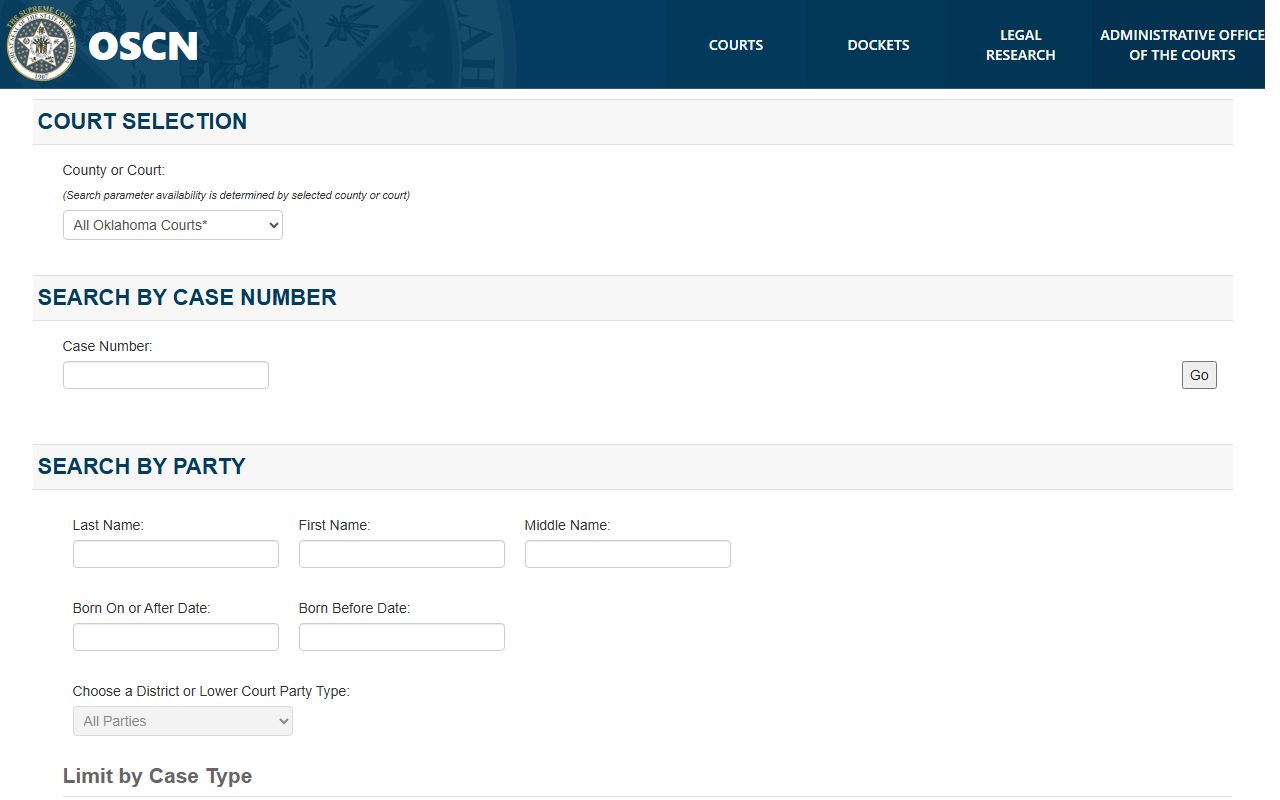
The OSCN docket search page above is where most people start when looking for an Oklahoma divorce decree online. You can select a county, enter a name, and pull up case results in seconds.
Note: Divorce decrees are court records maintained by the county Court Clerk, not the Oklahoma State Department of Health. For the actual decree document, contact the Court Clerk in the county where the case was filed.
How to Search Oklahoma Divorce Decree Records
There are a few ways to search for a divorce decree in Oklahoma. Online is the fastest option for basic case info. An in-person visit works best when you need the full decree or a certified copy.
The Oklahoma State Courts Network is the state's free public access system for court case data. It covers all 77 counties. You can search by party name, case number, or date range. Divorce cases use the FD prefix for Family/Divorce matters. The system shows party names, docket entries, hearing dates, and case status. Not every page of the file shows up online. But you can get a good sense of a case and find the case number you need to request the decree.
To search for a divorce decree on OSCN, you need at least one of these:
- Full name of one or both spouses
- The county where the divorce was filed
- Approximate year of the filing
- The FD case number if you have it
You can also search in person at any county courthouse. Walk into the Court Clerk's office during business hours. Staff can look up cases by name or case number. They can pull the file and make copies on the spot. Certified copies cost more than plain ones. Most counties charge $1.00 for the first page and $0.50 for each page after that. Certification runs between $0.50 and $5.00 depending on the county. A search fee of $5.00 to $15.00 may apply if you do not have the case number.
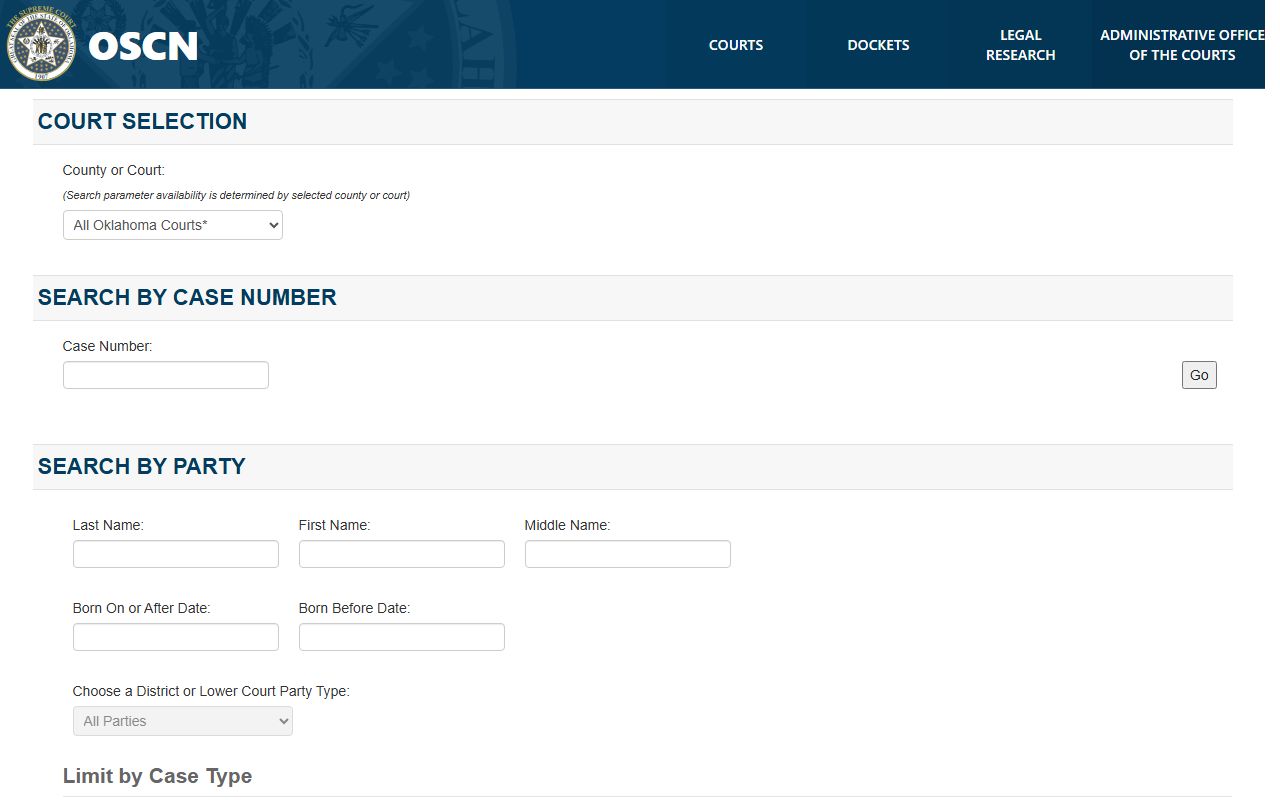
The OSCN case search tool shown above allows you to narrow results by case type, making it easier to find divorce decree filings in any Oklahoma county.
Oklahoma Divorce Decree Laws
Oklahoma divorce law is found in Title 43 of the Oklahoma Statutes. This title covers grounds for divorce, residency rules, property division, custody, and support. The state uses the term "divorce" rather than "dissolution of marriage" in most official filings, though both terms appear in court documents.
Under Title 43 Section 101, Oklahoma allows both fault and no-fault grounds for divorce. No-fault means incompatibility. Fault grounds include abandonment, adultery, impotence, extreme cruelty, habitual drunkenness, imprisonment, and insanity. Most cases today use incompatibility as the basis. The court does not require proof of wrongdoing when both sides agree the marriage should end.
Residency matters. Under Title 43 Section 102, at least one spouse must have lived in Oklahoma for six months before filing. You also have to have been a resident of the county where you file for at least 30 days. Military members stationed in Oklahoma can meet the residency rule too. If children are part of the case, Oklahoma must have jurisdiction under the Uniform Child Custody Jurisdiction and Enforcement Act.
Oklahoma uses equitable distribution for property. The court divides marital property in a way that is fair, but not always equal. Separate property stays with the spouse who owns it. The court looks at how long the marriage lasted, each person's income, and what each brought into the marriage. Under Title 43 Section 121, the court can award alimony based on need and ability to pay.
The Oklahoma Bar Association provides free legal information about the divorce process and can connect you with a family law attorney in your area.
Getting Copies of a Divorce Decree in Oklahoma
To get a copy of a divorce decree, contact the Court Clerk in the county where the case was filed. You can visit in person, call, or send a written request by mail. The Court Clerk can pull the file by name or case number.
In-person requests are the fastest. Walk into the Court Clerk's office with a valid photo ID. Give them the names of both parties and the approximate date. If you have the case number, that speeds things up. Staff can usually make copies the same day. Certified copies carry the court seal and are needed for legal purposes like proving your divorce status or changing your name. Plain copies cost less but do not have legal standing.
Mail requests work too. Send a written letter to the Court Clerk's office with the full names of both parties as they appear on the decree, the approximate date of the divorce, the case number if you know it, your return address, and a check or money order for fees. Include a self-addressed stamped envelope. Processing by mail takes about one to two weeks depending on the county. Some counties accept email requests for basic information, though certified copies usually must be picked up in person or sent by mail.
The Oklahoma State Department of Health can verify that a divorce occurred for events after 1968. This costs about $15. But it is a verification letter, not the divorce decree itself. For the actual decree, the county Court Clerk is the only source.
The OSDH statistics page above provides statewide divorce data but does not offer individual divorce decree copies.
What an Oklahoma Divorce Decree Contains
A divorce decree in Oklahoma is the final court order that ends the marriage. It is signed by the judge and filed with the Court Clerk. This is the document most people need when they say they want their "divorce papers."
The decree lays out all the terms. It covers who gets what property, how debts are split, custody of children, visitation schedules, child support amounts, and spousal support if any. It also includes any name changes. Once the judge signs the decree, the marriage is legally over. Oklahoma requires a 90-day waiting period from the date of filing before a divorce can be finalized if there are minor children. Without children, the waiting period is shorter. The decree becomes part of the permanent court record.
A full divorce case file in Oklahoma typically includes these documents:
- Petition for divorce
- Summons and proof of service
- Answer from the other spouse if filed
- Temporary orders for custody or support
- Property settlement agreement
- Final divorce decree signed by the judge
Most of these are public records. Anyone can ask the Court Clerk for copies. Some financial details and information about minor children may be restricted. Social security numbers and bank account numbers get redacted from public copies.
Legal Help for Divorce in Oklahoma
Legal Aid Services of Oklahoma provides free legal help to people who qualify based on income. They handle family law cases including divorce, custody, and support across the state. Their website has information about eligibility and how to apply.
The Oklahoma Bar Association divorce info page gives a plain-language overview of the divorce process. It covers filing steps, grounds for divorce, property division, custody, and more. The Bar also runs a lawyer referral service to help you find a family law attorney near you.
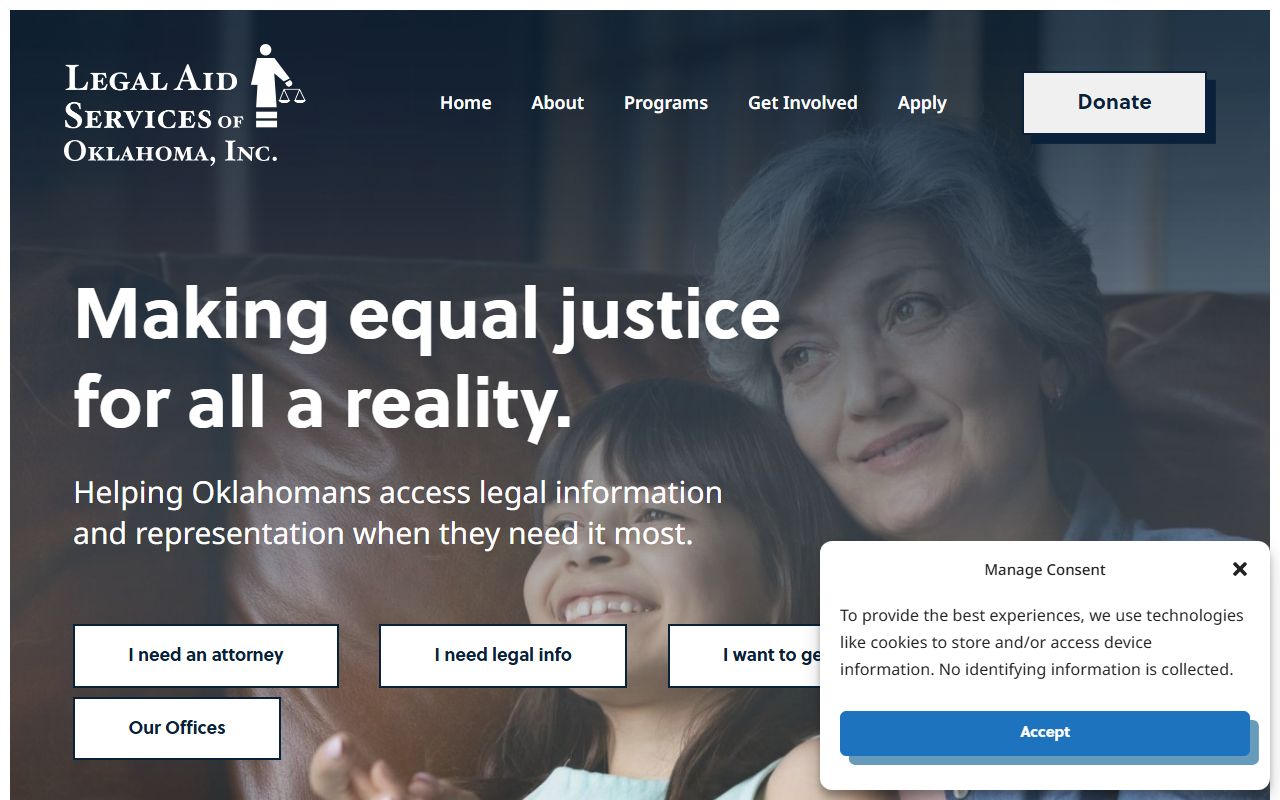
Legal Aid Services of Oklahoma, shown above, offers free legal assistance for divorce and custody matters to qualifying residents across the state.
The Oklahoma Historical Society can help with historical divorce decree research. Their collections include microfilmed court records from many counties, going back to territorial days before 1907. This is useful for genealogical research or finding very old divorce records that may not be available at the courthouse.
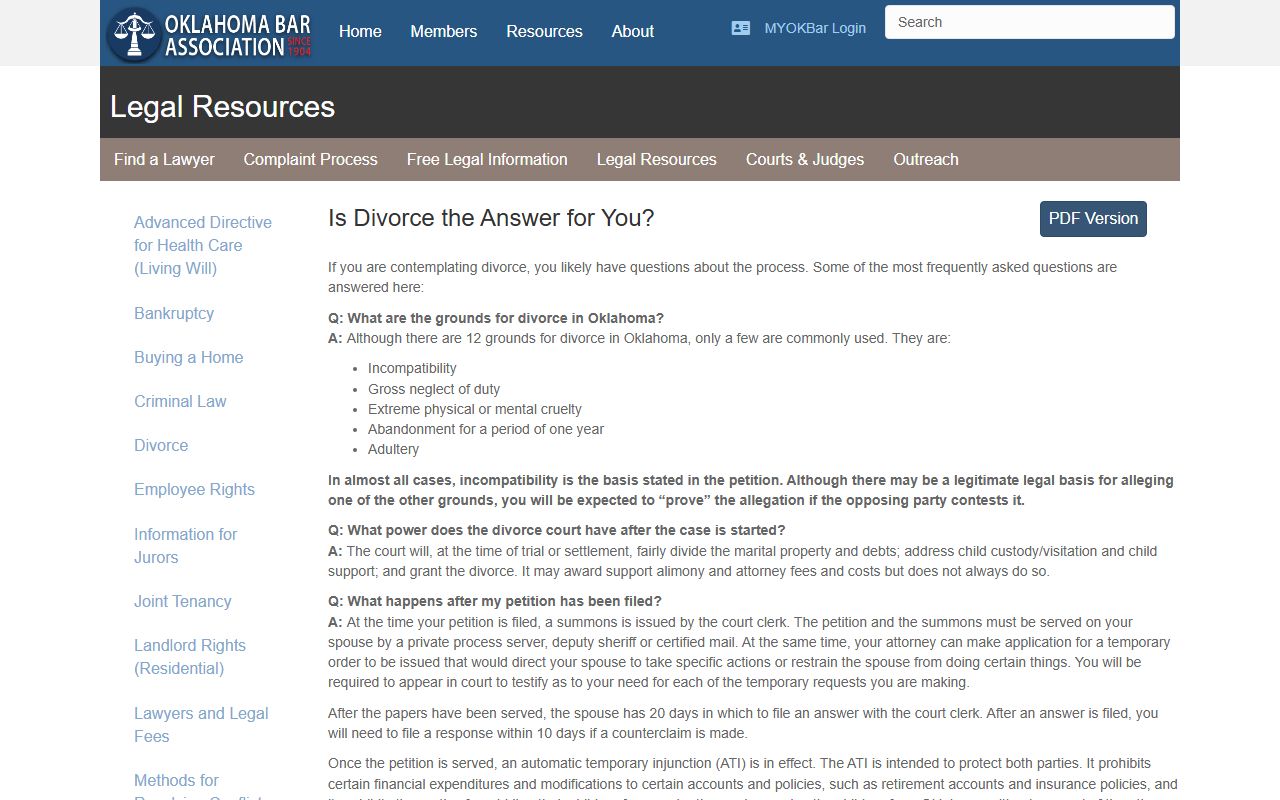
The Oklahoma Bar Association page above explains the divorce process in plain language and links to attorney referral services.
Note: The Court Clerk cannot give legal advice. If you need help understanding your divorce decree or filing for divorce, contact Legal Aid Services of Oklahoma or a licensed attorney.
Are Oklahoma Divorce Decree Records Public
Yes. Divorce decree records in Oklahoma are public court records under the Oklahoma Open Records Act. You do not need to be a party to the case. You do not need to give a reason for your request. Most of the case file is open to anyone who asks at the Court Clerk's office.
Some parts of divorce files have limits on access. Financial source documents such as tax returns and pay stubs may not be public. Social security numbers and bank account numbers are redacted. Information about minor children may be restricted in some cases. A judge can seal records if there is a strong reason, but that is rare. The vast majority of divorce decree records in Oklahoma are fully accessible to the public through the Court Clerk or through the OSCN case search system.
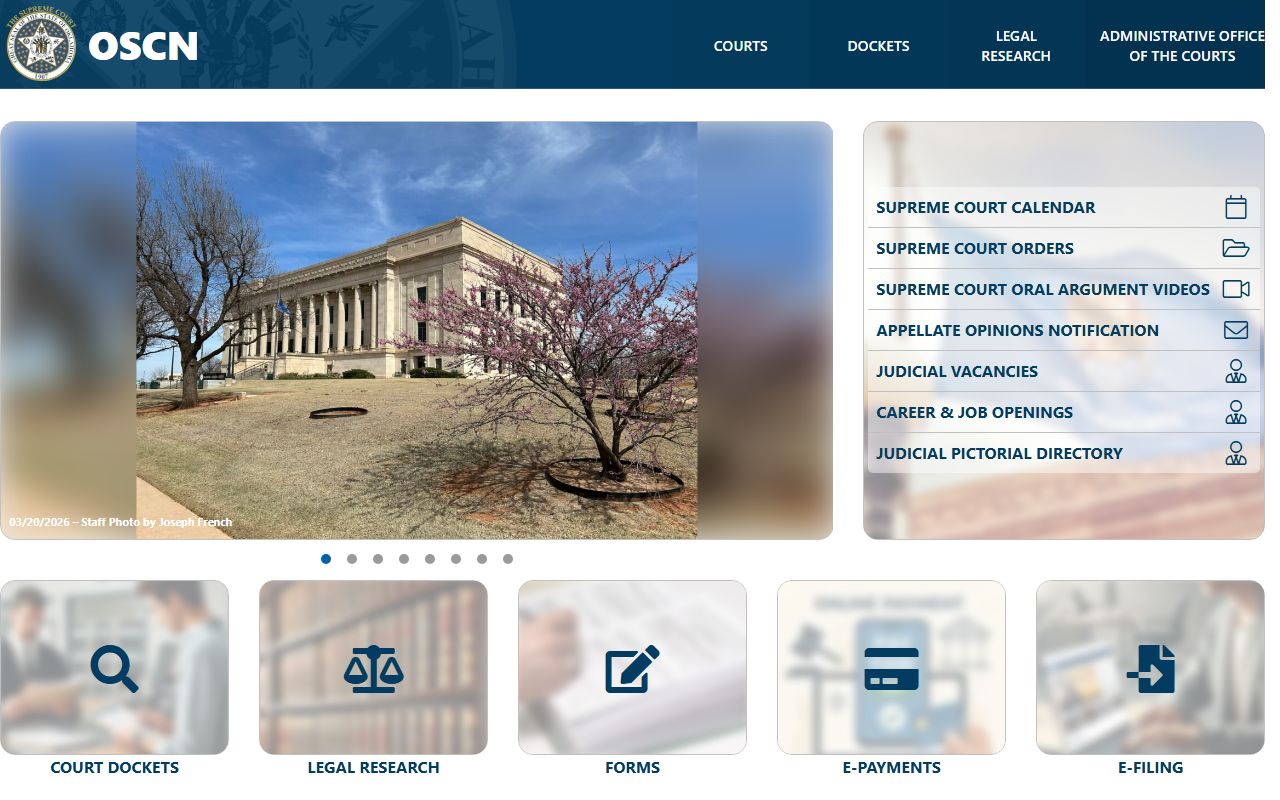
The OSCN homepage provides free access to court records from all 77 Oklahoma counties, including divorce decree case information.
Browse Oklahoma Divorce Decree Records by County
Each of Oklahoma's 77 counties has its own Court Clerk that handles divorce decree records. Pick a county below to find local contact info and resources.
Divorce Decree Records in Major Oklahoma Cities
Residents of major cities file for divorce at the District Court in their county. Pick a city below to find out where to search for divorce decree records in that area.