
Kingfisher County Divorce Decree Records
Kingfisher County divorce decree records are maintained by the Kingfisher County District Court Clerk in Kingfisher, Oklahoma. If you need to search for a dissolution case, confirm a final judgment, or request certified copies of a divorce decree, the clerk's office at the Kingfisher County Courthouse is your first stop. Records go back to Oklahoma statehood in 1907, and many recent cases are searchable online.
Kingfisher County Overview
Kingfisher County District Court Clerk
The Kingfisher County District Court Clerk is Lisa Markus. Her office is located at the Kingfisher County Courthouse, mailing address PO Box 328, Kingfisher, OK. Office hours run Monday through Friday, 8 AM to 4 PM. The clerk's office handles all divorce filings, dissolution of marriage petitions, and official court records for the county. Staff can help you locate a case by name, pull documents, and issue certified copies of a final divorce decree.
You can reach the clerk's office by phone at (405) 375-3813. When you call, it helps to have the names of both parties and a rough idea of the filing year. The clerk can search by party name or case number. If the case is on file, they can confirm the date the decree was entered and tell you what documents are available for copying.
Certified copies of a Kingfisher County divorce decree carry the court seal and are required for legal uses such as name changes, remarriage applications, and updating government records. The clerk's office is the only source for sealed copies. Fees for copies and certifications are set by state law, and the clerk can give you the current rate when you contact the office.
How to Search Kingfisher County Divorce Records Online
Kingfisher County is included in the Oklahoma Supreme Court Network, commonly called OSCN. This free public database indexes district court dockets statewide, including family dissolution cases. The OSCN docket search tool lets you search by party name, case number, or filing date. Select "Kingfisher" from the county list and enter the last name of either spouse to pull up matching results.
Results on OSCN display the full case caption, filing date, assigned judge, and a complete list of docket entries. If a divorce decree was signed and entered, you will see an entry such as "Decree of Divorce" or "Decree of Dissolution of Marriage" in the docket. This confirms the divorce was finalized. Docket information is free to view. Some document images are available online; others may require a visit to the courthouse.
Older Kingfisher County divorce cases that predate the OSCN digital system are available only in paper form at the courthouse. If you are researching a case from the mid-20th century or earlier, contact the clerk directly and ask about manual search procedures. The clerk may charge a research fee for searches that require pulling physical files. For early records, the Oklahoma Historical Society can also be a useful source for older county court documents.
The OSCN Kingfisher County court page provides direct access to that court's docket search and general court information. This is the most reliable online starting point for recent Kingfisher County divorce decree searches.
Oklahoma Title 43 and the Divorce Decree Process
Divorce in Oklahoma is governed by Title 43 of the Oklahoma Statutes. A divorce decree is the final court order that ends the marriage. It covers division of marital property, allocation of marital debts, spousal support when applicable, and, in cases with minor children, custody and child support arrangements. The judge signs the decree after the parties have either reached an agreement or the court has resolved contested matters at a hearing or trial. Once filed with the clerk, it becomes a public record.
Title 43, Section 102 requires that at least one spouse have lived in Oklahoma for six months before filing for divorce in any district court, including Kingfisher County. The most common ground cited in Oklahoma divorce filings is incompatibility. This no-fault ground does not require either party to prove wrongdoing. Other grounds are listed in Title 43 but are used far less often. In uncontested cases, the process can move quickly once all required documents are filed.
After the decree is entered, either party can request a copy from the clerk. If circumstances change, particularly regarding child custody or support, a party can file a motion to modify the decree in the same case. Any modification order is added to the existing case file and becomes part of the permanent court record. Title 43 also allows a spouse to resume a former name as part of the decree itself, which is often done in the same proceeding.
Kingfisher County District Court on OSCN
The image below is sourced from the OSCN Kingfisher County court page, which provides access to docket search and court information for the Kingfisher County District Court.
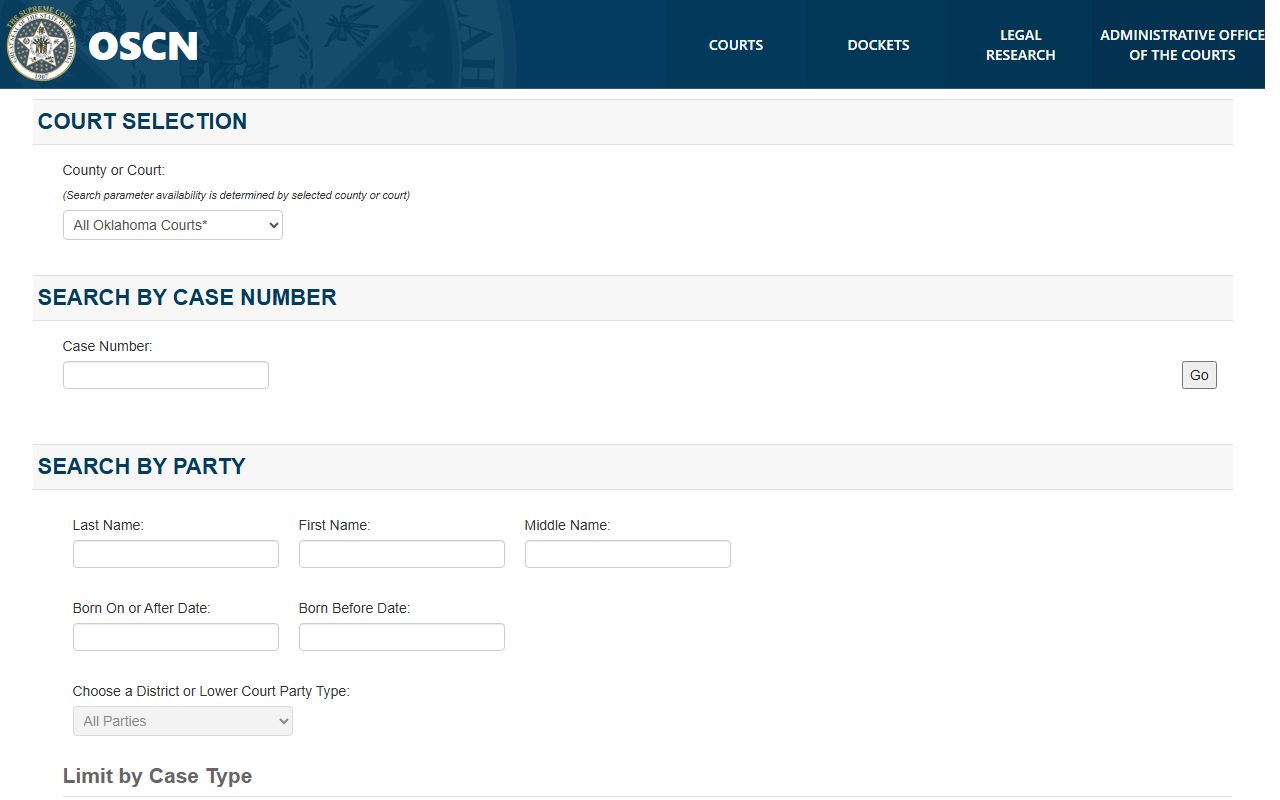
Use this portal to search Kingfisher County divorce decree cases by name, case number, or date. Most cases filed in recent decades are indexed here.
Kingfisher County Government and Court Resources
The image below comes from the Kingfisher County government website, which lists county offices, contact information, and links to court-related services.
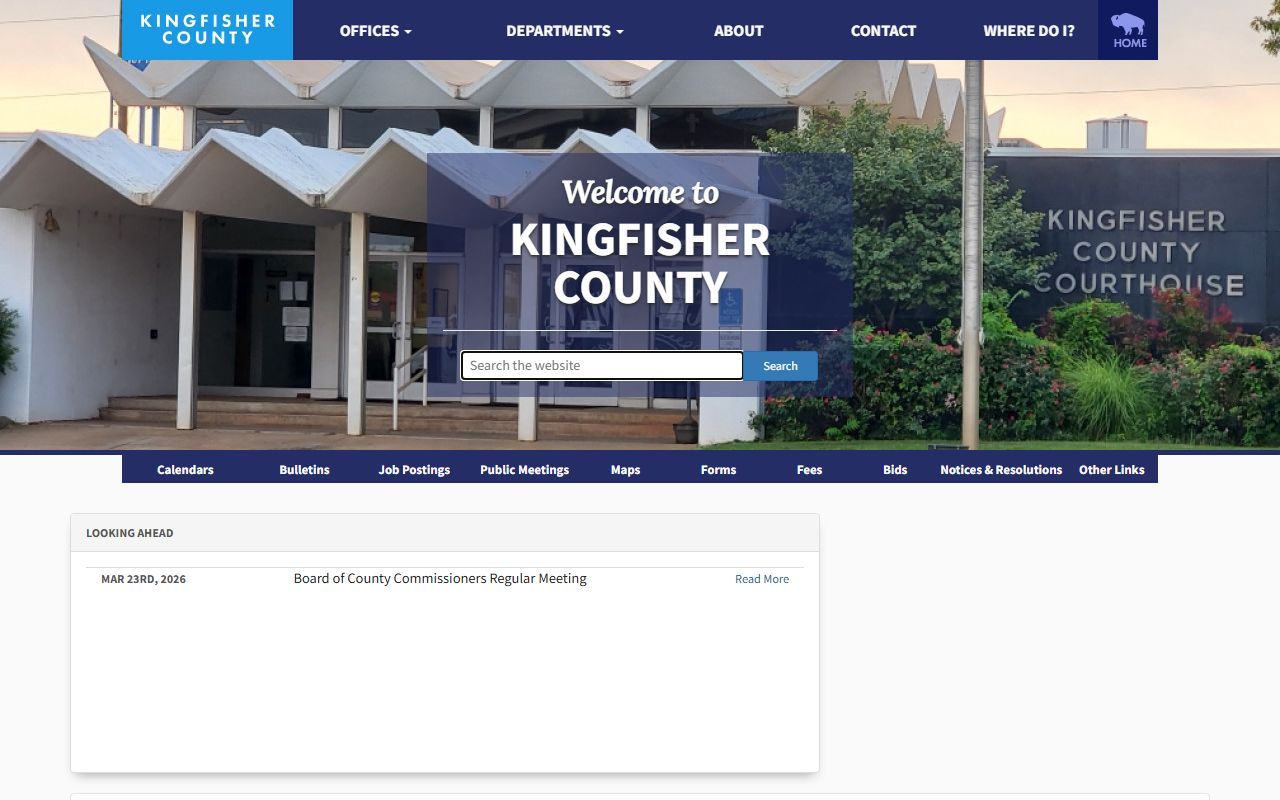
The county government site is a good place to confirm office hours, locate the courthouse address, and find contact details for the District Court Clerk before making an in-person visit.
Vital Records and Divorce Documentation in Oklahoma
The Oklahoma State Department of Health (OSDH) maintains a statewide registry of divorces granted in each county. Under Oklahoma law, district court clerks are required to report finalized divorces to the OSDH after the decree is entered. The OSDH registry can confirm that a divorce took place in Kingfisher County in a given year, but it does not issue certified copies of decrees. For official court documents, you must go through the Kingfisher County District Court Clerk.
The distinction matters. A divorce certificate from the OSDH is a summary record. A certified copy of the actual divorce decree from the court is the full legal document. For most legal purposes, you need the court-issued certified copy. If you only need to verify that a divorce occurred, the OSDH registry may be sufficient. The clerk can advise which document you need for your specific situation.
Legal Aid and Attorney Resources for Kingfisher County
If you need help understanding a divorce decree or navigating a dissolution filing in Kingfisher County, the Oklahoma Bar Association offers a lawyer referral service. You can use the Bar Association's directory to find a licensed Oklahoma attorney who handles family law matters and is familiar with the 4th Judicial District. The Bar Association's website also has general information about divorce procedures under Oklahoma law.
For residents who cannot afford an attorney, legal aid organizations in Oklahoma serve low-income clients with civil legal matters, including divorce and family law questions. The Oklahoma Bar Association's website lists legal aid providers by region. Kingfisher County is in northwest-central Oklahoma, and residents may qualify for services from organizations serving that part of the state. Eligibility is typically based on income.
Pro se filers, meaning those who represent themselves, can ask the court clerk's office for the standard Oklahoma divorce forms approved for use in district courts. The clerk can point you to the right forms but cannot give legal advice. For complex cases involving property, debt, or children, consulting an attorney is strongly advised before proceeding.
Nearby Counties
Kingfisher County borders several other Oklahoma counties, each with its own district court and divorce records. If you are not sure which county holds a particular record, you may need to check neighboring courts as well.