
Cherokee County Divorce Decree Lookup
Cherokee County divorce decree records are maintained by the Cherokee County District Court Clerk in Tahlequah, Oklahoma. Tahlequah is the seat of the Cherokee Nation as well as the county seat, making the area unique in that both state district court and Cherokee Nation Tribal Court records may be relevant depending on the circumstances of a particular divorce case.
Cherokee County Overview
Cherokee County District Court Clerk
The Cherokee County District Court Clerk is located at 213 W. Delaware Street in Tahlequah, Oklahoma 74464. Office hours are Monday through Friday, 8:00 AM to 4:30 PM. The clerk's main phone number is (918) 456-0691. Staff handle all court filings for the 13th Judicial District, including divorce and dissolution of marriage cases. The clerk is the official custodian of all Cherokee County divorce decree records.
When requesting records, it helps to know the names of both parties and the approximate year the divorce was filed. Divorce cases carry an "FD" prefix in Cherokee County, as in all Oklahoma district courts. If you are looking for a case from the past two decades, the OSCN online system is the fastest starting point. For older records, the clerk's office will need to conduct a manual search of paper files.
The Cherokee County official government website has contact information for all county offices, including the court clerk. It is a good resource for confirming current hours and procedures before you visit or call.
Online Search for Cherokee County Divorce Cases
The Oklahoma Supreme Court Network provides free online access to Cherokee County district court records. Use the OSCN docket search and choose "Cherokee" from the county dropdown. Enter the last name of either party to the divorce. The system returns case numbers, filing dates, and full docket histories. You can see at a glance whether a final divorce decree was entered and when.
The OSCN Cherokee County court page provides a direct link to Cherokee County case records and background on the district court. OSCN is updated regularly, and cases filed in recent years should appear there within days of filing. For genealogy or historical research involving older cases, OSCN may not have complete coverage, and a courthouse visit may be necessary.
Oklahoma and Cherokee Nation Jurisdiction
Cherokee County has a unique legal landscape. Tahlequah is the capital of the Cherokee Nation, one of the largest federally recognized tribes in the United States. The Cherokee Nation operates its own court system, which handles certain civil and family matters involving tribal members and activities on tribal land. This means that in some cases, a divorce involving Cherokee Nation members may be handled through Cherokee Nation Tribal Court rather than, or in addition to, the Oklahoma district court.
If the divorce you are researching involved Cherokee Nation members and tribal land issues, you may need to check with the Cherokee Nation directly. The Cherokee Nation's judicial branch maintains its own records, which are separate from the Oklahoma district court system and are not accessible through OSCN. For most standard state divorces, the Cherokee County District Court in Tahlequah handles the filing and maintains the decree.
Under Oklahoma law, Title 43 governs state divorce proceedings. The Cherokee County District Court applies this statute to all state-filed divorces, regardless of whether the parties are tribal members. Residency in the state for six months is required before a state divorce can be filed, per Title 43, Section 102.
What Cherokee County Divorce Decrees Cover
A Cherokee County divorce decree is the court's official order ending a marriage under Oklahoma law. Once signed by a judge and entered in the docket, it is a final and binding judgment. The decree sets out how marital property is divided, addresses any debts, and, if there are children, establishes custody and child support. Spousal support terms, if any, also appear in the decree.
The decree can be modified later if circumstances change. A modification request goes back to the same Cherokee County District Court and is filed under the original case number. Common reasons for modification include a change in income affecting child support or a relocation that affects custody arrangements. Any modification order becomes part of the court's permanent record, attached to the original case file.
Certified copies of a Cherokee County divorce decree are available from the court clerk. You will need a certified copy for legal name changes, remarriage, updating Social Security or insurance records, and other formal purposes. The clerk charges a fee for each certified copy, and the fee schedule is available by contacting the office directly.
Cherokee Nation Courts and Tribal Records
The image below, taken from the Cherokee Nation official website, shows the tribal government's web portal, which includes information about Cherokee Nation courts and legal services available to tribal members in the Tahlequah area.
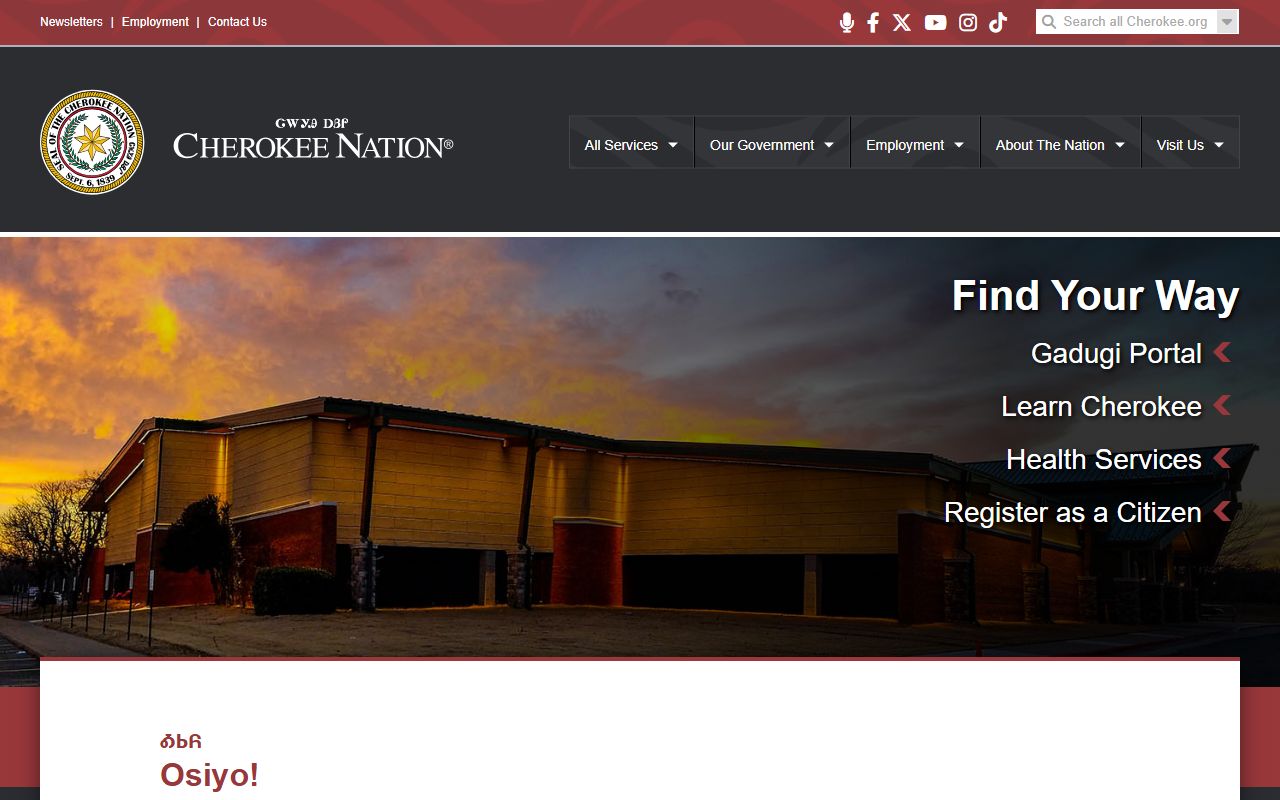
The Cherokee Nation court system operates separately from the Cherokee County District Court and handles matters under tribal jurisdiction, which may include certain family law cases involving tribal members.
Cherokee County Government and Court Resources
The image below is from the Cherokee County government portal, which provides access to county offices, contact information, and public records resources for Cherokee County, Oklahoma.
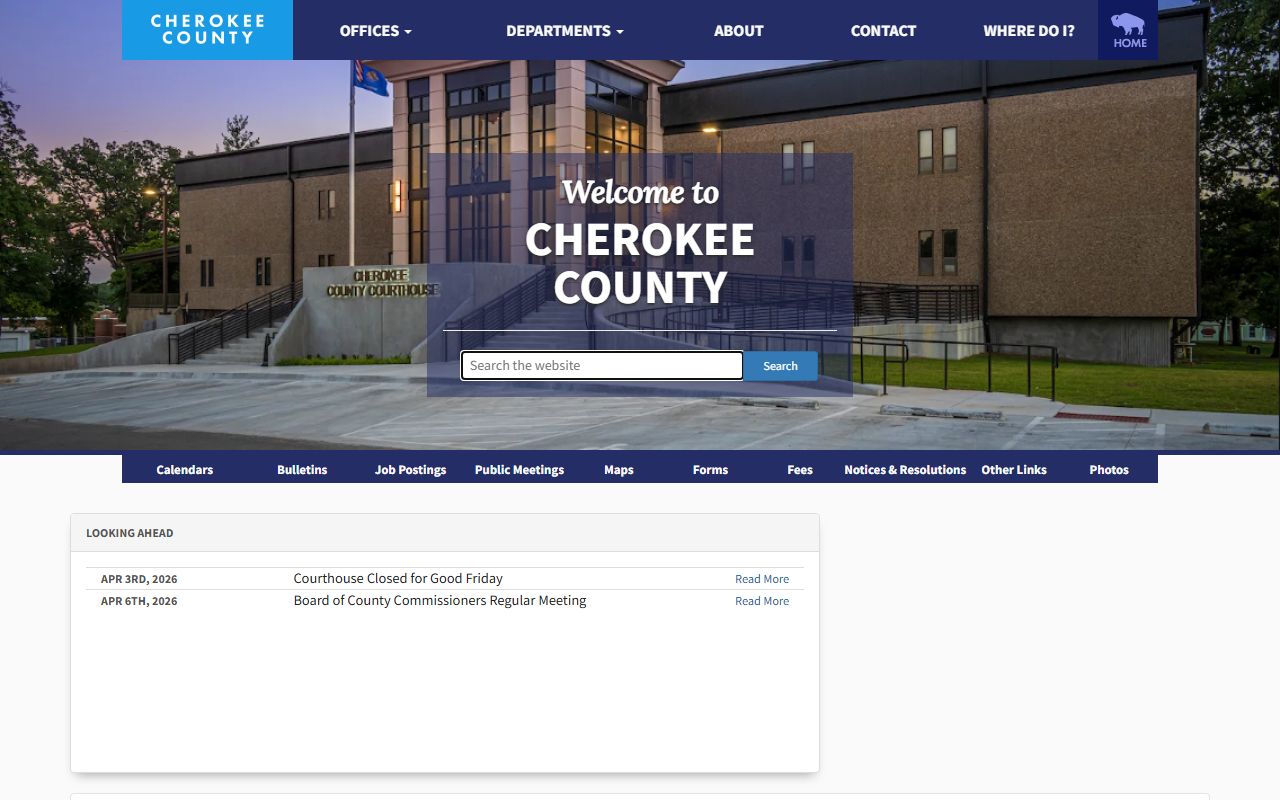
The county government site is useful for confirming courthouse hours, finding the clerk's mailing address, and checking for any updates to records access procedures.
FamilySearch and Historical Research
The FamilySearch Cherokee County genealogy page provides guidance on historical record collections for Cherokee County. For divorce records that predate digital court systems, FamilySearch indexes microfilmed and scanned records that may be the only way to locate an older dissolution case. Their wiki also covers related record types, such as marriage and probate records, that can help confirm family relationships in genealogical research.
The Oklahoma Historical Society holds additional archival materials for Cherokee County, including newspapers, county histories, and older court records. When courthouse records are incomplete or damaged, the Historical Society's collections can sometimes fill in the gaps. They also have extensive records related to the Five Civilized Tribes, which may be relevant for research involving Cherokee Nation members.
State Divorce Data and OSDH
The Oklahoma State Department of Health tracks divorce statistics statewide, including for Cherokee County. The OSDH data and statistics page lets you access aggregated divorce data by county and year. This can be useful for confirming whether a divorce was recorded in Cherokee County during a particular period, especially when you do not have a case number to work from.
OSDH does not issue certified copies of decrees. Those come from the court clerk. But OSDH's records can help you narrow down a search, which then leads you back to the Cherokee County District Court for the actual documents.
Legal Resources in Cherokee County
Residents of Cherokee County who need help with a divorce or related legal matter can contact the Oklahoma Bar Association for a referral to a licensed family law attorney in the Tahlequah area. The Bar Association's referral service is a good first step for anyone uncertain about how to proceed with a divorce filing, decree modification, or enforcement issue in the 13th Judicial District.
Legal aid services may also be available for eligible residents. The Oklahoma Bar Association website includes links to legal aid providers serving northeastern Oklahoma. Additionally, the Cherokee Nation provides legal assistance to enrolled tribal members for certain matters, including family law. Check the Cherokee Nation's website for current legal services offerings in the Tahlequah area.
Nearby Counties
Cherokee County is located in northeastern Oklahoma. The following neighboring counties each maintain their own district court divorce records and can be searched separately if needed.